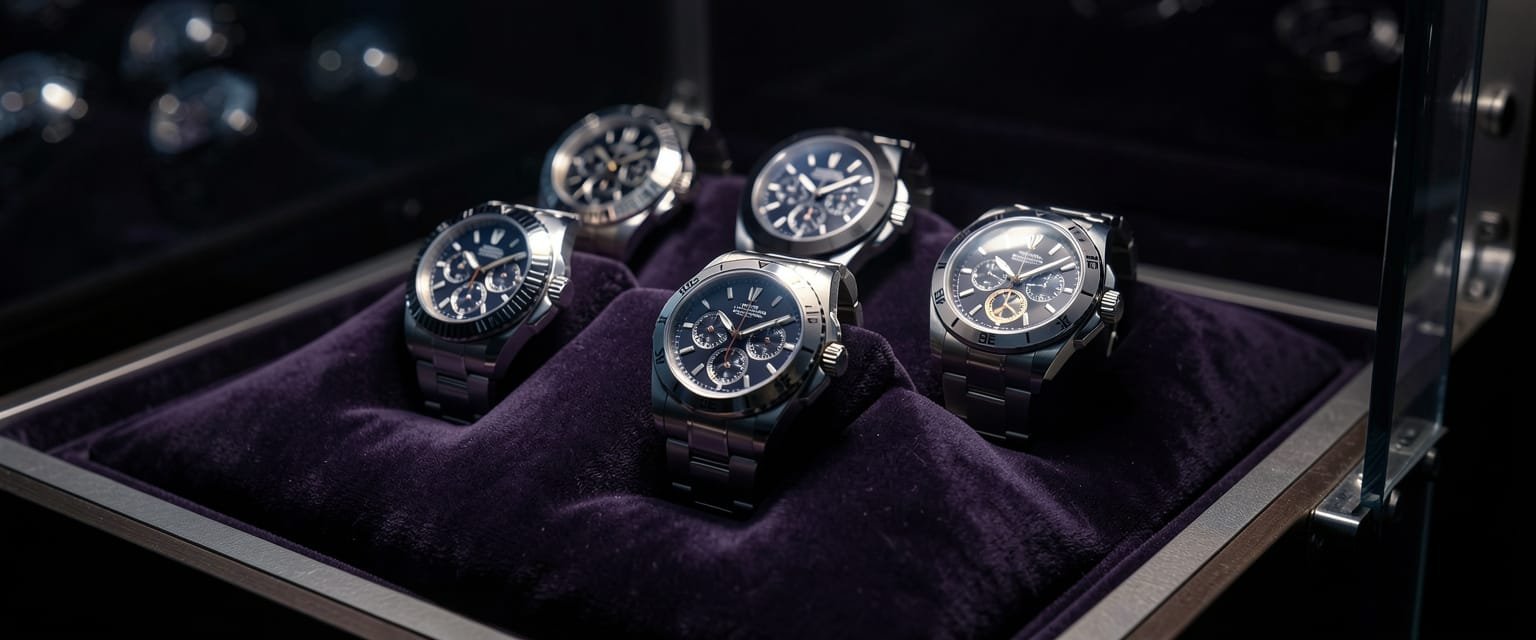

Autodromo Watches translate the atmosphere of historic motorsport into distinctive timepieces shaped by racing instruments, automotive materials, and minimalist industrial design.
Founded in 2011 by American industrial designer and automotive enthusiast Bradley Price, Autodromo is an independent watch and lifestyle brand dedicated to the culture of motoring. Based in New York, the company draws inspiration from the instruments, machines, colors, and graphic design associated with different eras of automobile racing. Rather than creating conventional watches and merely adding automotive logos, Autodromo develops each model around a specific period or discipline of motorsport. Dashboard gauges, tachometers, endurance-racing prototypes, rally cars, single-seat Grand Prix machines, and vintage driving equipment all influence the brand’s designs. Autodromo has become particularly well known for models such as the Group B, Prototipo, Monoposto, Intereuropa, and Group C, each interpreting a different chapter of automotive history through a contemporary watch design.
Autodromo occupies a distinctive position within the independent watch market by combining serious industrial design with an authentic understanding of automotive culture. The brand does not attempt to imitate established Swiss luxury manufacturers. Instead, it approaches watchmaking from the perspective of a product designer fascinated by the visual language and mechanical character of historic automobiles.
Every Autodromo collection begins with a clearly defined automotive reference. Dial layouts may resemble dashboard instruments, cases may incorporate materials associated with racing machines, and typography often reflects the graphic design of a particular decade. These references are usually subtle enough that the watches remain attractive even to buyers who are not dedicated car collectors.
The Group B collection is inspired by the radical rally cars of the 1980s. Its lightweight construction, integrated bracelet design, vivid accents, and technical dial reflect the experimental materials and aggressive styling associated with Group B competition. Modern editions commonly use automatic movements and compact proportions suited to everyday wear.
The Prototipo series draws from endurance racing and prototype sports cars of the late 1960s and early 1970s. Its chronograph layout, barrel-shaped case, contrasting registers, and bold racing colors recall the instruments and liveries of classic competition cars. Several Prototipo models use meca-quartz chronograph movements, combining quartz accuracy with the mechanical action and instant reset of a traditional chronograph mechanism.
Autodromo’s Monoposto collection takes inspiration from single-seat Grand Prix racing cars of the 1950s. The dial resembles a period tachometer, while the red line crossing the crystal references the maximum-revolution markings once painted directly onto racing gauges. Current Monoposto automatic editions continue this concept with mechanical movements and limited production.
The Group C family interprets the digital instrumentation and aerodynamic race cars of 1980s and 1990s endurance competition. Models within the series have included digital chronographs and mechanical designs, including the Group C Turbo Sport, which uses anodized aluminum and takes inspiration from turbo-era dashboard instruments.
Another important collection is the Intereuropa, a hand-wound mechanical watch influenced by elegant road rallies and Gran Turismo automobiles. Its refined typography, wire-style lugs, manually wound movement, and leather strap give it a more sophisticated character than the brand’s overtly competition-inspired watches.
Autodromo has used a variety of Japanese and Swiss movements depending on the model, including automatic, hand-wound mechanical, quartz, digital, and meca-quartz calibers. The company selects movements according to the design purpose and intended price of each collection rather than limiting itself to one movement type.
Common materials include stainless steel, titanium, anodized aluminum, sapphire crystal, leather, textile, and integrated metal bracelets. Limited editions frequently incorporate special colors, automotive partnerships, individually numbered cases, or materials chosen to reinforce the historical inspiration.
Consumers often choose Autodromo because its watches offer a genuine connection to motorsport without relying on oversized cases or conspicuous branding. The designs are generally compact, wearable, and visually distinctive, making them suitable for both automotive enthusiasts and collectors of independent watches.
The brand also produces driving gloves, sunglasses, apparel, and accessories, reinforcing its identity as a broader motoring lifestyle company rather than only a watch manufacturer. Autodromo describes itself as a driving-oriented watch and lifestyle brand combining midcentury character with minimalist design.
Positioned within the affordable enthusiast and premium microbrand segment, Autodromo Watches appeal to buyers seeking original design, motorsport history, limited production, and a more thoughtful alternative to conventional automotive-branded watches.
Price Range: $500 – $2,000+
Positioning: Mid-Range
Yes. Autodromo is a respected independent American brand known for original industrial design, strong automotive inspiration, limited production, and well-executed enthusiast watches.
Autodromo watches can be worth buying for customers who value distinctive design, motorsport history, compact proportions, and limited-edition models rather than traditional luxury-brand prestige.
Autodromo is an American company based in New York. Its watches use movements and components sourced from established international manufacturers.
Autodromo was founded in 2011 by Bradley Price, an American industrial designer and automotive enthusiast.
Autodromo is best known for watches inspired by historic motorsport, especially the Group B, Prototipo, Monoposto, Intereuropa, and Group C collections.
Yes. Autodromo offers automatic watches, although the brand has also produced hand-wound mechanical, meca-quartz, quartz, and digital models.
Movement choice varies by collection. Autodromo has used Japanese automatic movements, Swiss hand-wound movements, meca-quartz chronograph calibers, conventional quartz movements, and digital modules.
Many Autodromo watches are produced in limited quantities, while some models remain available as regular collections. The brand also maintains an archive of discontinued watches that will not be restocked.
Both brands create automotive-inspired watches. REC often incorporates physical material recovered from historically significant vehicles, while Autodromo focuses more strongly on industrial design, dashboard graphics, racing eras, and the visual culture of motorsport.
Autodromo develops each watch around a specific motorsport era rather than simply placing a car logo on a conventional design. Its combination of historical references, minimalist styling, wearable proportions, varied movement types, and limited production gives the brand a distinctive identity.