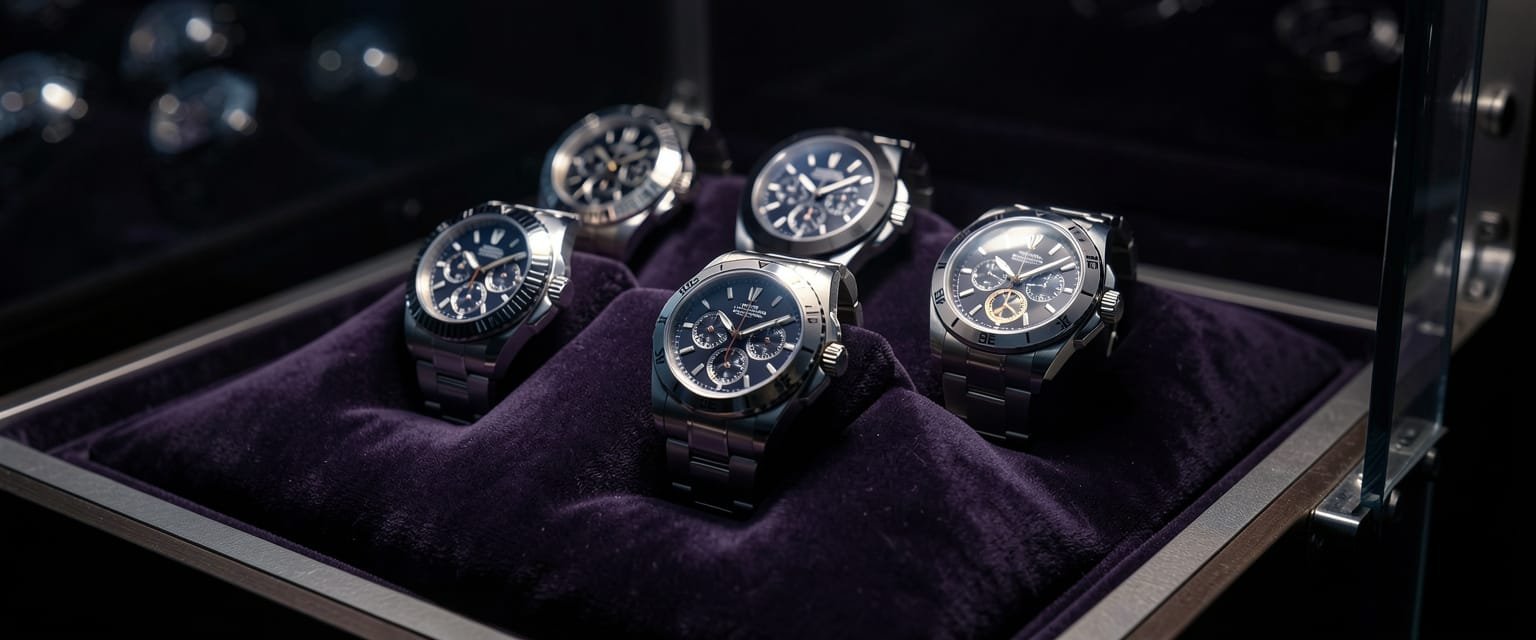

Amazfit Watches combine long battery life, GPS navigation, fitness and recovery tracking, AMOLED displays, and AI-powered smart features across affordable everyday and advanced sports-focused wearables.
Amazfit is a global smart-wearable brand launched in September 2015 by Huami, the Chinese wearable-technology company now known as Zepp Health. Today, Amazfit is Zepp Health’s principal consumer smartwatch brand and is available in more than 90 countries across the Americas, Europe, the Middle East, Africa, and Asia-Pacific. Rather than operating as a conventional watchmaker, Amazfit develops connected wearables built around health monitoring, fitness tracking, GPS navigation, sports analytics, and everyday smartwatch functionality. Its ecosystem combines proprietary hardware with Zepp OS, BioTracker biometric sensors, the Zepp mobile app, Zepp Coach, and AI-based features such as Zepp Flow. The current range stretches from affordable everyday watches such as the Bip and Active families to multisport Balance models, rugged T-Rex watches, and performance-oriented Cheetah devices for runners and endurance athletes. This broad lineup allows Amazfit to compete across a much wider price range than many budget smartwatch brands.
Amazfit has developed from an affordable fitness-wearable brand into one of the most extensive alternatives to Apple, Samsung, Garmin, Fitbit, Polar, and other established smartwatch companies. Its strategy centers on combining comparatively aggressive pricing with long battery life, colorful AMOLED displays, health sensors, GPS technology, sports tracking, and increasingly sophisticated training and recovery tools.
The brand was launched in September 2015 by Huami, a Chinese wearable-technology company founded in 2013. Huami changed its corporate name to Zepp Health Corporation in 2021, while Amazfit continued as its main global consumer smartwatch brand. Zepp Health now describes Amazfit as one of its leading consumer brands alongside Zepp Aura and Zepp Clarity.
Amazfit should not be confused with Amazon. Despite the similarity of the names, the two companies are unrelated. Amazfit is part of Zepp Health and has no corporate connection with Amazon.
It is also not a Xiaomi sub-brand. Huami historically worked closely with Xiaomi and manufactured several Xiaomi wearable products, which created lasting confusion among consumers, but Amazfit has been marketed as Huami’s own brand rather than as a Xiaomi subsidiary.
One of Amazfit’s strongest competitive advantages is battery life. Whereas many full-featured smartwatches require charging every day or two, numerous Amazfit models are designed to operate for a week or considerably longer under typical usage.
The affordable Bip 6, for example, offers up to 14 days of typical battery life while combining an AMOLED display, heart-rate and sleep monitoring, more than 140 workout modes, GPS functionality, AI coaching, and access to the Zepp app. Its U.S. retail price of $79.99 makes it one of the lowest-cost entry points into the modern Amazfit ecosystem.
The Active family takes a more lifestyle-oriented approach. The Active 2 combines a stainless-steel case with a 1.32-inch AMOLED display rated at up to 2,000 nits, more than 160 workout modes, GPS navigation with downloadable maps, BioTracker health monitoring, Zepp Flow voice control, and up to 10 days of battery life.
Current Active models span multiple shapes and price levels, including round and square versions as well as newer premium configurations. This gives Amazfit a strong presence among consumers who want health and fitness functionality but prefer a smartwatch that can also work as an everyday fashion accessory.
The Balance family moves further into the premium multisport category. Balance watches combine fitness tracking with recovery metrics, navigation, health monitoring, smart features, and higher-grade materials.
The Balance 2, for example, uses a 1.5-inch AMOLED display protected by sapphire glass and offers more than 170 workout modes. It supports downloadable maps, golf-course and ski-resort maps, strength training, HYROX workout modes, and multisport activity tracking.
Its hardware includes dual-band satellite positioning, a BioTracker 6.0 biometric sensor, barometric altimeter, temperature sensor, microphone, speakers, and 10 ATM water resistance. Battery life can reach approximately 21 days with typical use, while GPS endurance can extend beyond 60 hours in power-saving positioning modes.
Amazfit has increasingly positioned the Balance range around both training and recovery rather than simple activity counting. Data from workouts, sleep, heart rate, stress, and other measurements is processed through the Zepp ecosystem to provide readiness and recovery insights.
The T-Rex family is designed for buyers who need a more rugged smartwatch. These models emphasize outdoor navigation, high water resistance, durable construction, long battery life, physical buttons, and extensive sport profiles.
Current T-Rex 3 Pro models are available in multiple case sizes and use sapphire glass together with Grade 5 titanium bezels and buttons. They support six satellite systems, offline mapping, route planning, point-of-interest search, more than 180 sports modes, recreational diving, Bluetooth calling, and an integrated dual-color LED flashlight.
Battery life on the 48mm T-Rex 3 Pro can reach approximately 25 days, while the smaller 44mm version is rated for up to 17 days under typical conditions. This makes the series particularly attractive to hikers, travelers, endurance athletes, and outdoor users who do not want to charge a watch every night.
The broader Range collection also includes the T-Rex 3 and higher-end T-Rex Ultra 2, extending Amazfit into pricing normally associated with premium outdoor GPS watches. Current U.S. retail pricing reaches approximately $550 for the T-Rex Ultra 2.
For running-focused customers, Amazfit developed the Cheetah series. These models emphasize GPS accuracy, route guidance, training metrics, performance analysis, and lightweight construction. By 2026, the range includes premium models such as the Cheetah 2 Pro and Cheetah 2 Ultra, with the latter reaching approximately $600 in the U.S. market.
A major component across modern Amazfit watches is the company’s BioTracker sensor technology. Depending on the model, watches can monitor heart rate, blood-oxygen saturation, stress, sleep, recovery, and other wellness metrics continuously or on demand.
These measurements integrate with the Zepp app, where users can review workouts, health trends, training information, sleep data, food tracking, and other metrics. Amazfit generally provides core smartwatch and fitness functionality without requiring a mandatory additional subscription for standard device use.
The software platform is built around Zepp OS, Zepp Health’s proprietary smartwatch operating system. Its lightweight architecture contributes to Amazfit’s relatively long battery life while supporting apps, notifications, health tracking, workout functions, navigation, and voice interaction.
Zepp Flow adds AI-based voice control to compatible watches. Users can interact with the device through natural-language commands, adjust settings, check fitness and readiness information, and perform supported smart functions without navigating multiple menus. On compatible Android phones, certain models can also assist with message replies.
GPS and navigation have become increasingly important differentiators. Higher-end Amazfit watches support dual-band positioning and multiple satellite systems, while downloadable offline maps, route import, turn-by-turn guidance, and points of interest make selected models considerably more capable than basic fitness trackers.
Sports support is similarly broad. Depending on the watch, Amazfit can track running, walking, cycling, swimming, hiking, strength training, skiing, golf, diving, HYROX competitions, and well over 100 additional activities.
Amazfit has become particularly active in the HYROX fitness ecosystem. Current models include dedicated HYROX race and training modes, reflecting the brand’s broader shift from general wellness tracking toward more specialized athletic performance.
Water resistance varies by model. Everyday watches such as Bip generally offer around 5 ATM, while premium Balance models can reach 10 ATM. Selected T-Rex watches are designed for demanding water activities and recreational diving. Exact depth ratings and activity suitability should always be checked for the individual model.
Display quality has also improved substantially. AMOLED screens are now common even at the lower end of the range, while premium watches can combine high brightness with sapphire crystal for better scratch resistance and outdoor visibility.
Materials vary from lightweight aluminum and fiber-reinforced polymers to stainless steel, sapphire glass, and titanium. This allows Amazfit to maintain inexpensive models while also competing more directly with higher-priced sports and lifestyle smartwatches.
One of the brand’s strengths is that the same Zepp ecosystem extends across several product categories. In addition to watches, Amazfit has expanded into devices such as the Helio Strap, a screen-free fitness and recovery tracker designed to complement the company’s smartwatch platform.
Amazfit’s pricing has consequently become much broader than during its early years. The U.S. smartwatch range currently begins around $80 with the Bip 6 and extends to approximately $600 for flagship performance models such as the Cheetah 2 Ultra and Balance Ultra.
That still leaves the brand competitively positioned against many premium smartwatch manufacturers. Consumers can enter the ecosystem for well under $100, while athletes who need sapphire glass, advanced navigation, multisport tracking, high water resistance, long GPS endurance, and premium materials can move into higher-end models without leaving the Amazfit platform.
Amazfit is especially appealing to users who prioritize battery endurance and fitness functionality over a highly app-centric smartwatch experience. Apple Watch and Wear OS devices generally offer deeper integration with smartphone applications, while Amazfit tends to focus more heavily on health, sport, navigation, battery life, and standalone fitness functionality.
Compared with Garmin, Amazfit often offers similar categories of features at lower prices, although Garmin maintains a deeper ecosystem for advanced endurance training, mapping, specialized sports, and professional performance analysis. Amazfit’s rapid expansion into running, outdoor sports, recovery, and multisport tracking has nevertheless made the comparison increasingly relevant.
The company has also achieved substantial global scale. Zepp Health reports more than 200 million devices shipped, while its products are available in over 90 countries. Amazfit watches have received international design recognition including iF Design Awards and Red Dot Design Awards.
Positioned within the affordable-to-mid-range smartwatch market, Amazfit Watches are particularly attractive to buyers seeking long battery life, comprehensive fitness tracking, strong GPS features, health monitoring, bright AMOLED displays, and an extensive choice of models without committing exclusively to the Apple, Samsung, or Garmin ecosystems.
Price Range: $80 – $600+
Positioning: Mid-Range
Choose a country to explore trusted online stores and authorized retailers where Amazfit Watches may be available.
Yes. Amazfit is an established global smartwatch brand with products ranging from inexpensive everyday fitness watches to advanced GPS and outdoor models. Its strongest advantages include long battery life, AMOLED displays, extensive sport tracking, GPS navigation, health monitoring, and competitive pricing.
Amazfit is owned by Zepp Health Corporation, formerly known as Huami. Zepp Health launched Amazfit as its consumer smartwatch brand in September 2015.
Yes. Amazfit originated as a brand of Chinese wearable-technology company Huami, now Zepp Health. Current Amazfit hardware is produced through Zepp Health companies including Anhui Huami Information Technology Co., Ltd. in China.
No. Amazfit is not a Xiaomi subsidiary or Xiaomi sub-brand. Huami historically worked closely with Xiaomi on wearable products, but Amazfit was developed as Huami’s own brand and today belongs to Zepp Health.
No. Amazfit has no affiliation with Amazon. The similar names occasionally cause confusion, but Amazfit is a Zepp Health smartwatch brand, while Amazon is a separate U.S. technology and retail company.
Major Amazfit families include Bip for affordable everyday use, Active for lifestyle and fitness, Balance for advanced multisport and wellness tracking, T-Rex for rugged outdoor activities, and Cheetah for performance-oriented running and endurance training.
Battery life depends on the model and usage. The Bip 6 can reach around 14 days of typical use, the Balance 2 up to approximately 21 days, and the 48mm T-Rex 3 Pro up to around 25 days. Heavy GPS use, always-on displays, calls, and intensive health monitoring reduce these figures.
Many Amazfit watches include built-in GPS. Higher-end models add dual-band positioning, support for multiple satellite systems, downloadable offline maps, route planning, turn-by-turn navigation, and other outdoor-navigation functions.
Both brands offer GPS watches focused on fitness, health, running, and outdoor activities. Garmin generally provides a deeper ecosystem for advanced training analytics, specialist sports, mapping, and endurance athletes, while Amazfit often delivers long battery life, AMOLED displays, health tracking, and strong multisport features at significantly lower prices.
Core Amazfit smartwatch, health, fitness, and Zepp app functionality does not require a mandatory additional subscription. Zepp Health may offer optional premium services or features separately, but compatible Amazfit watches can be used for their standard tracking and training functions without an ongoing subscription.